Futures exchanges and brokers may apply lower margin requirements to recognized calendar spreads than to two independent outright futures positions. The reason is that the two legs often have correlated exposure to the same underlying market.
Why margin can be lower
Because both legs reference the same underlying market, a broad price move may affect them in similar directions. Clearing systems can recognize some of that offset when calculating margin.
Lower margin does not mean low risk
The spread relationship itself can move sharply. Supply shocks, contract-specific events, liquidity changes or unusual curve shifts can create significant losses even when the outright market exposure is partly offset.
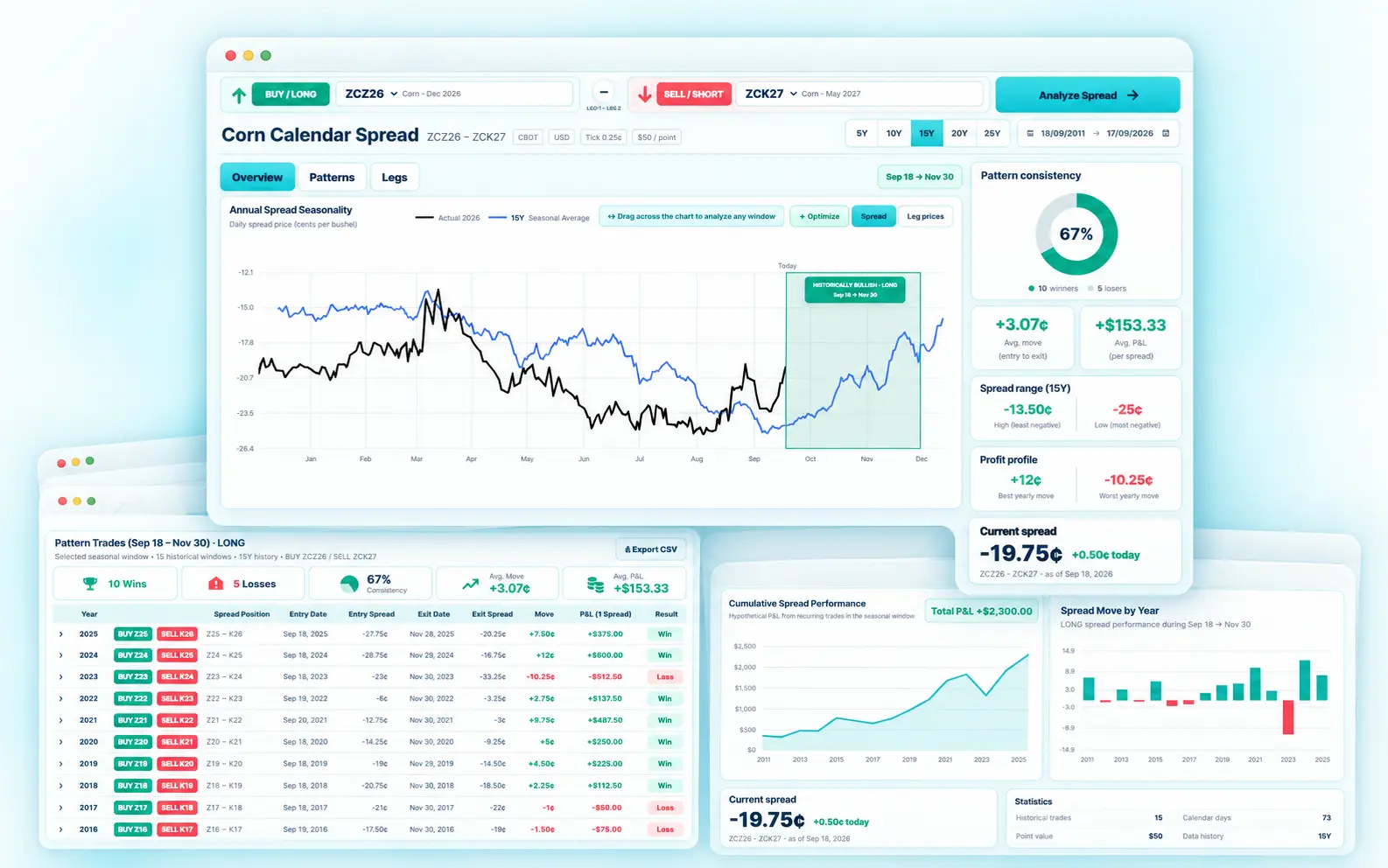
Test the relationship with real historical data
Choose the exact delivery months and compare recurring behavior across several lookback windows.
Analyze a Calendar SpreadWhat to monitor
- Initial and maintenance margin.
- Whether the broker recognizes the spread as an offset.
- Liquidity in both delivery months.
- Potential margin changes during volatile conditions.
- Contract multiplier and dollar value of a spread move.
Historical risk still matters
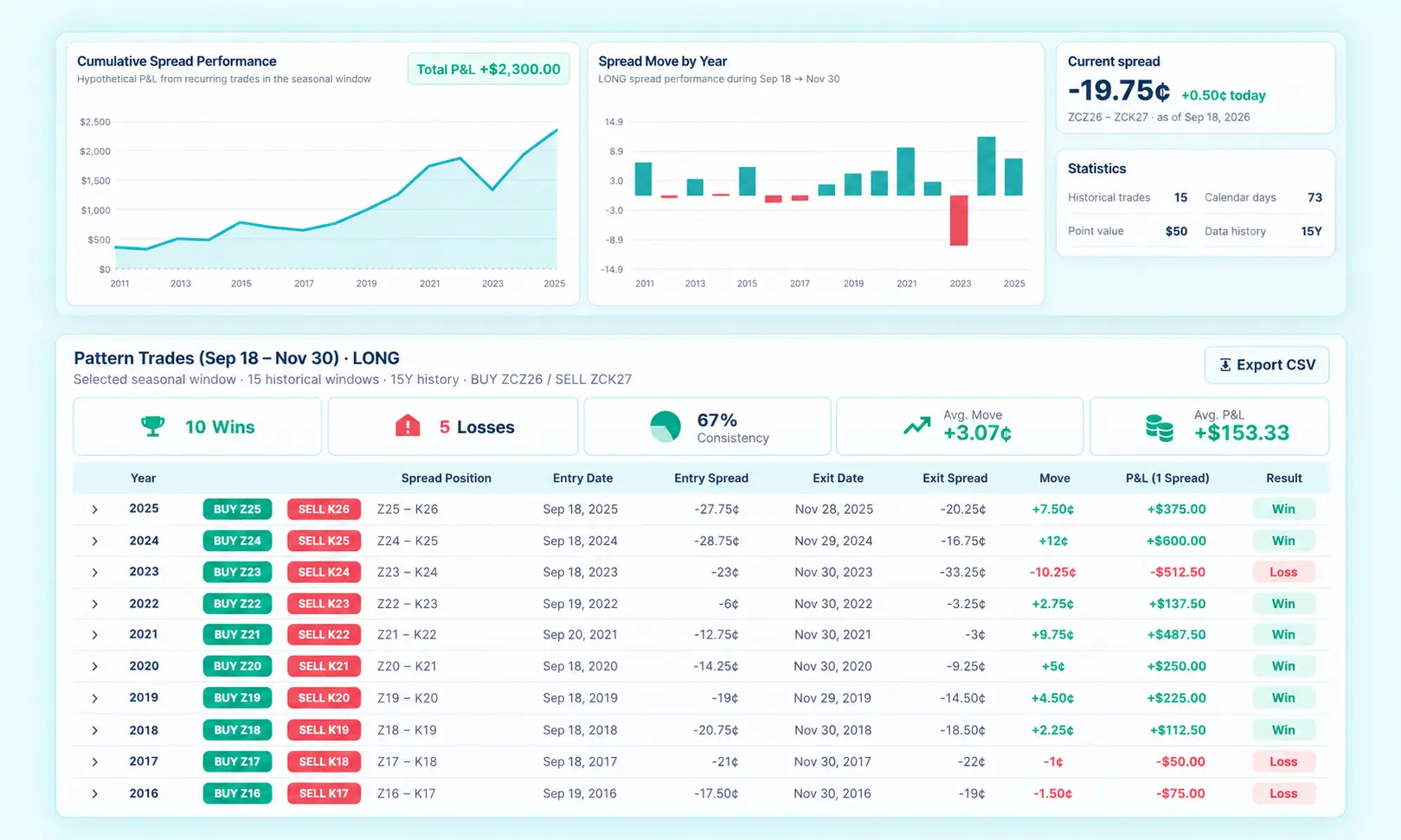
Margin tells you how much collateral is required, not how much the trade can lose. Historical drawdowns, worst seasonal outcomes and adverse curve regimes are more useful for assessing the behavior of the spread itself.
Margin is a clearing requirement, not a risk estimate
It is easy to confuse lower spread margin with lower economic risk. Margin is the collateral the clearing system or broker requires based on current risk models. It can change rapidly when volatility rises or when the relationship between the legs becomes less stable.
A position can therefore satisfy margin requirements and still experience a large adverse move. Historical drawdown, worst-year movement and liquidity are separate questions that should be evaluated independently.
Why broker treatment can differ
Recognized exchange calendar spreads may receive explicit margin offsets, while custom or less liquid structures may receive different treatment. Brokers can also add house requirements above exchange minimums.
Before trading, verify the exact margin treatment for the specific pair and date. Do not assume a margin number from one spread applies to another market, another expiration pair or another broker.
Explore this cluster
Frequently asked questions
What is a calendar spread in futures?
It is a relative-value position using two delivery months of the same underlying futures market.
Why do delivery months trade at different prices?
Storage, financing, inventory, expected supply and demand, seasonality and market structure can all influence the relationship.
Does a calendar spread eliminate risk?
No. The two legs can offset some broad price exposure, but the relationship between contracts can still move sharply.
Why compare individual years instead of only the average?
A smooth average can hide inconsistent outcomes. Individual years show dispersion, losing periods and whether a pattern is robust.
Research your next calendar spread
Use Futures Spread to compare delivery months, seasonal behavior and historical outcomes.
Open Futures Spread AnalyzerFutures trading involves substantial risk. Historical patterns do not guarantee future results. This material is for education and research only and is not investment advice.