What is the near month?
The near month is the earlier of the two delivery contracts being compared. It is often more sensitive to immediate supply and demand conditions.
What is the deferred month?
The deferred month expires later and can reflect storage costs, financing and expectations for future supply or demand.
Why the relationship changes
If nearby supply becomes tight, the near contract may strengthen relative to deferred months. If supply is ample and carrying costs dominate, later contracts may command a premium.
Test the relationship with real historical data
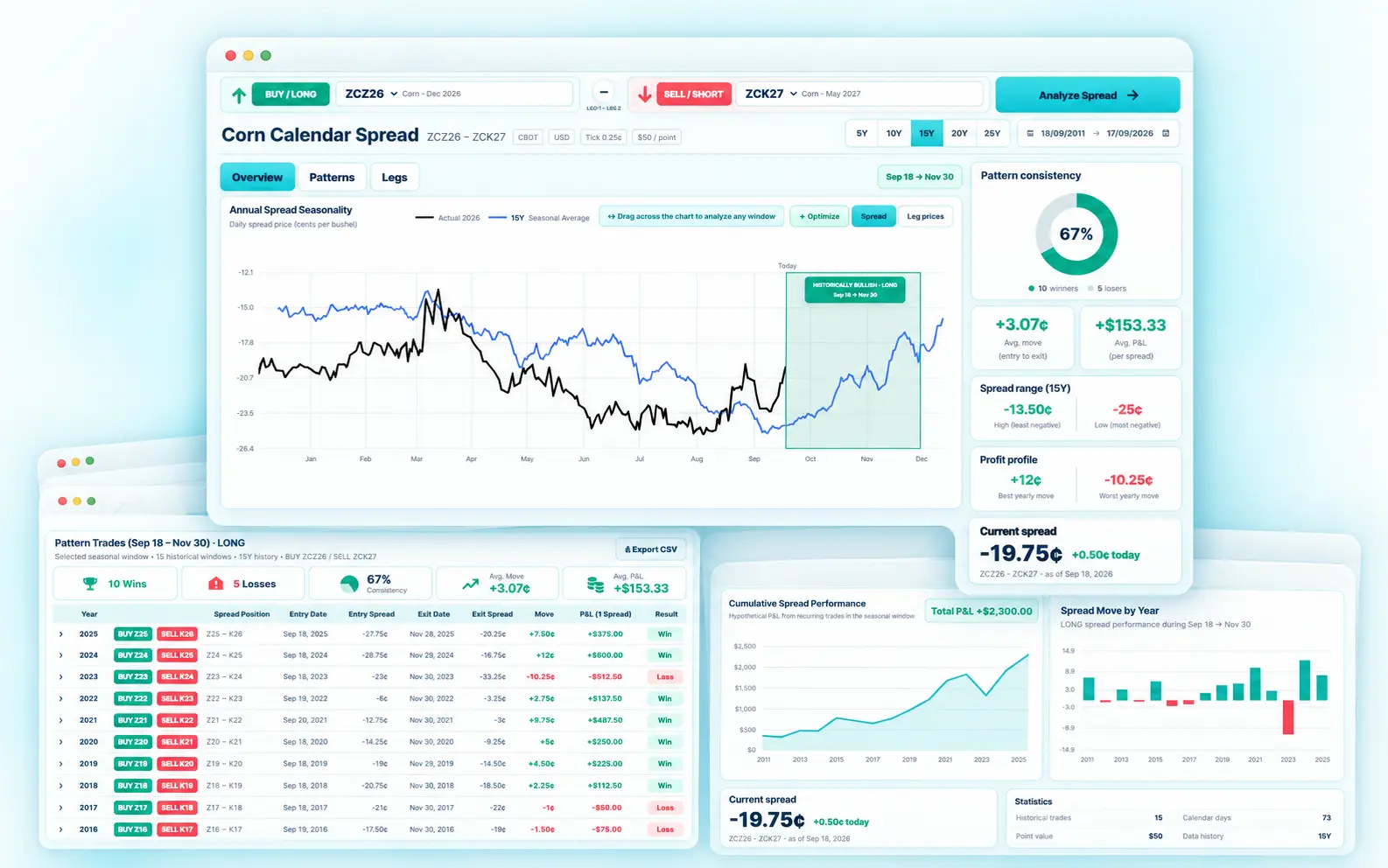
Choose the exact delivery months and compare recurring behavior across several lookback windows.
Analyze a Calendar SpreadNear vs deferred in contango
In contango, deferred contracts generally trade above nearby contracts. This often reflects carrying costs and sufficient near-term supply, although the exact cause can vary by market.
Near vs deferred in backwardation
In backwardation, nearby contracts generally trade above later contracts. This can reflect strong immediate demand or tight current supply.
Why seasonality matters
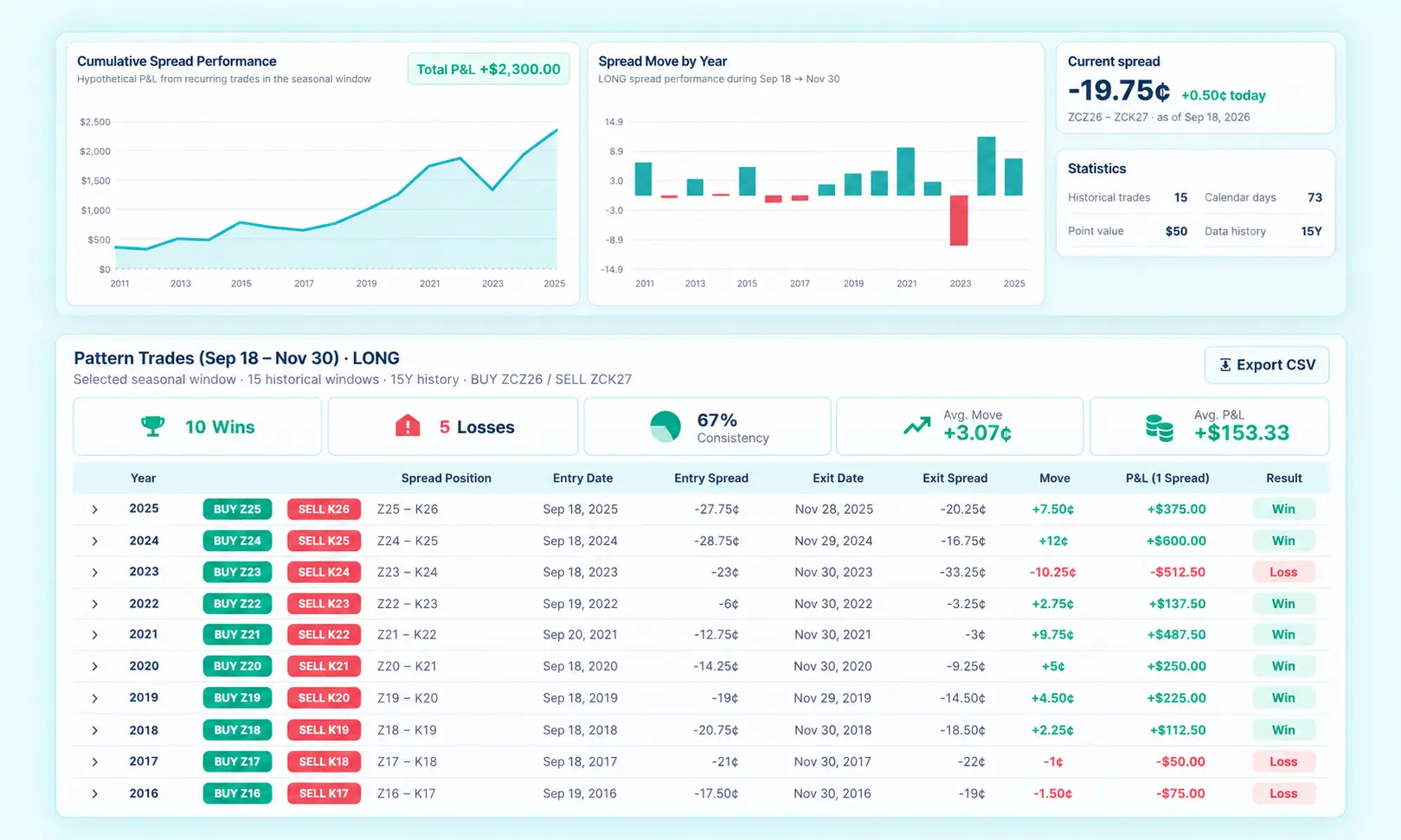
A near-versus-deferred relationship can change through planting, harvest, storage or demand cycles. Historical seasonal analysis helps show whether a recurring timing pattern existed across multiple years.
Nearby contracts are usually more sensitive to immediate conditions
The nearer delivery month has less time before expiration, so current inventory, logistics and physical demand can matter more. A supply shock may therefore move the nearby contract more aggressively than a deferred month.
The deferred contract has more time for production, imports or demand changes to adjust. That does not make it less volatile in every case, but it often reflects a different balance of expectations.
Why the near/deferred distinction matters in a spread
A spread is effectively measuring how the market values immediate availability versus future availability. When the nearby contract gains relative to the deferred month, the market is placing more value on prompt delivery. When it weakens, future delivery becomes relatively more expensive.
That relationship can change seasonally, especially around harvests, storage transitions and inventory cycles.
Explore this cluster
Frequently asked questions
What is a calendar spread in futures?
It is a relative-value position using two delivery months of the same underlying futures market.
Why do delivery months trade at different prices?
Storage, financing, inventory, expected supply and demand, seasonality and market structure can all influence the relationship.
Does a calendar spread eliminate risk?
No. The two legs can offset some broad price exposure, but the relationship between contracts can still move sharply.
Why compare individual years instead of only the average?
A smooth average can hide inconsistent outcomes. Individual years show dispersion, losing periods and whether a pattern is robust.
Research your next calendar spread
Use Futures Spread to compare delivery months, seasonal behavior and historical outcomes.
Open Futures Spread AnalyzerFutures trading involves substantial risk. Historical patterns do not guarantee future results. This material is for education and research only and is not investment advice.