Gold futures calendar spreads compare delivery months of the same metal. Because Gold is durable and widely storable, its spread economics differ from perishable or strongly seasonal commodities.
Cost of carry
Financing, storage and other carrying costs are important components of the relationship between nearby and deferred Gold contracts.
Curve structure
Gold often trades with a relatively orderly term structure, but changing interest rates, funding conditions or market stress can alter the spread between delivery months.
See the workflow with live Corn data
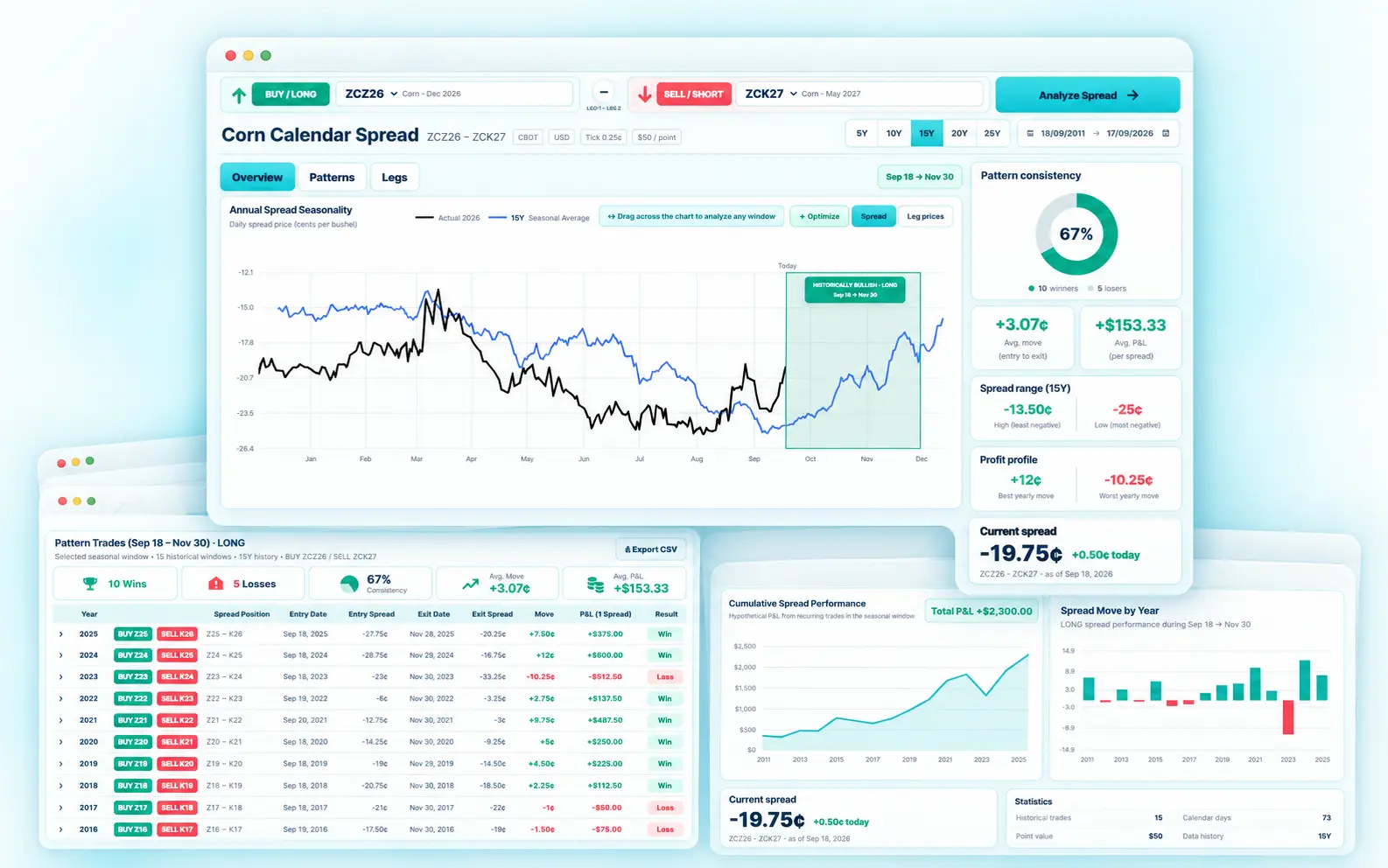
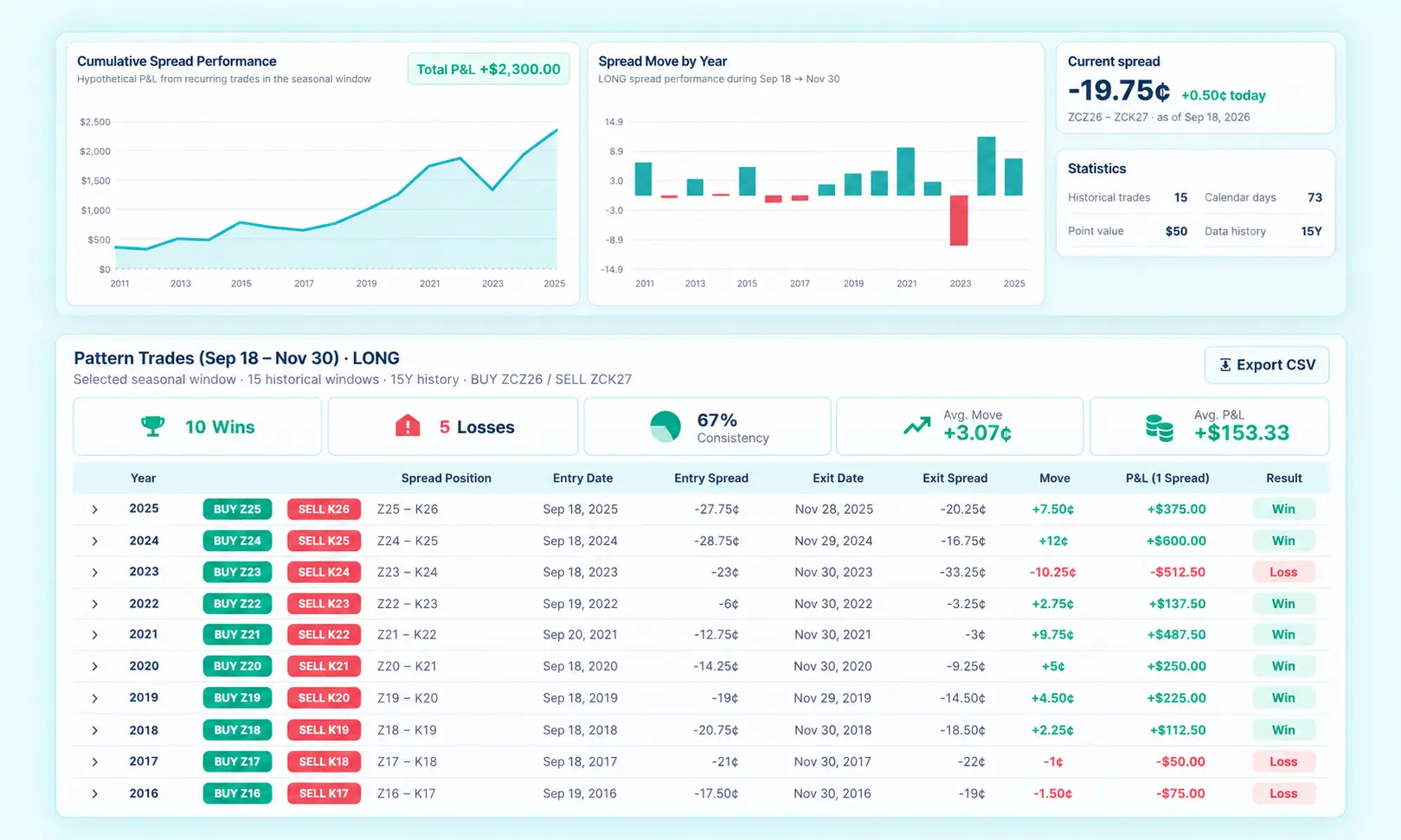
The research process—exact dated contracts, multiple lookbacks, individual years and curve context—is demonstrated in the Corn analyzer.
Open Corn SeasonalitySeasonality is different
Gold can show calendar effects, but they are not based on planting or harvest. Any seasonal study should be evaluated on its own historical evidence rather than borrowed from agricultural logic.
Research questions
- How stable is the spread across multiple lookbacks?
- Do financing conditions explain changes?
- Are extreme years dominating the result?
- How liquid are both contract months?
Product note: Gold coverage is educational; the current live Futures Spread analyzer focuses on Corn.
Gold spread economics differ from agricultural markets
Gold does not have a harvest cycle. It is durable, globally stored and heavily influenced by financing conditions. That makes cost of carry, interest rates and funding conditions more important to Gold calendar spreads than physical production seasonality.
Why financing matters
Holding Gold through time has an opportunity cost. Changes in interest rates and financing can alter the relationship between nearby and deferred futures. This means Gold spread analysis should pay close attention to carry rather than importing the seasonal logic used for grains.
What a Gold spread study should test
- How stable the month-to-month relationship is across rate regimes.
- Whether the spread changes materially during market stress.
- How much of the move is explained by financing versus other demand factors.
- Whether the pattern survives multiple lookbacks.
Because the current Futures Spread product focuses on Corn, Gold pages remain educational rather than implying live Gold coverage.
Explore this cluster
Frequently asked questions
What is commodity spread trading?
Commodity spread trading focuses on relative price relationships, often between delivery months of the same commodity or between economically related commodity markets.
Why are calendar spreads common in commodities?
Physical commodities have storage, production and demand cycles that can affect nearby and deferred delivery months differently.
Are all commodity spreads seasonal?
No. Some relationships show recurring timing, while others are dominated by changing fundamentals or market structure.
Which commodity does Futures Spread currently analyze live?
The current live product provides detailed dated-contract and seasonal analysis for Corn calendar spreads. The other commodity pages in this cluster are educational.
Use the same research framework on a live Corn spread
Compare exact delivery months, seasonal windows, individual years and current structure in the Futures Spread analyzer.
Open Corn Spread AnalyzerFutures trading involves substantial risk. Historical patterns do not guarantee future results. Educational examples for Wheat, Soybeans, Energy and Gold describe market concepts; the current live Futures Spread analyzer is focused on Corn.