A calendar spread is the price difference between two delivery months of the same futures market. The formula is straightforward, but reversing the leg order reverses the sign and the direction of every chart and P&L calculation.
The basic formula
If December corn is 527.50 cents per bushel and May corn is 548.25, then December minus May equals -20.75 cents.
Why the sign matters
A spread at -20.75 can rise to -15.00 even though it remains negative. That is a 5.75-cent increase in the spread. A spread trader must therefore distinguish the level of the spread from the change in the spread.
| December | May | Dec − May |
|---|---|---|
| 527.50 | 548.25 | -20.75 |
| 532.00 | 547.00 | -15.00 |
| Spread change | +5.75 | |
Long spread vs short spread
If your defined spread is December minus May, a long-spread view benefits when that calculated relationship rises. A short-spread view benefits when it falls. This is why the chart convention must be written down before analyzing history.
From spread points to dollar P&L
The dollar value of a spread move depends on the futures contract specification. First calculate the move in the quoted unit, then apply the contract's value per point or tick. Do not assume that one point has the same dollar value across commodities.
Why a two-leg P&L check is useful
You can also calculate each leg separately and confirm that their combined P&L matches the spread move. This is a good quality-control step when building a backtest, especially when different products have different multipliers or ratios.
Common calculation errors
- Switching the order of the two contracts halfway through a study.
- Mixing dollars, cents, points or ticks.
- Using different price fields for the two legs.
- Ignoring unequal contract ratios in intercommodity spreads.
- Displaying a short trade with a long-spread sign convention.
How to keep the calculation consistent
Store the two leg identifiers, the operation order and the quote convention as part of the strategy definition. A chart, backtest and trade table should all derive from the same definition rather than recalculating the relationship differently in each view.
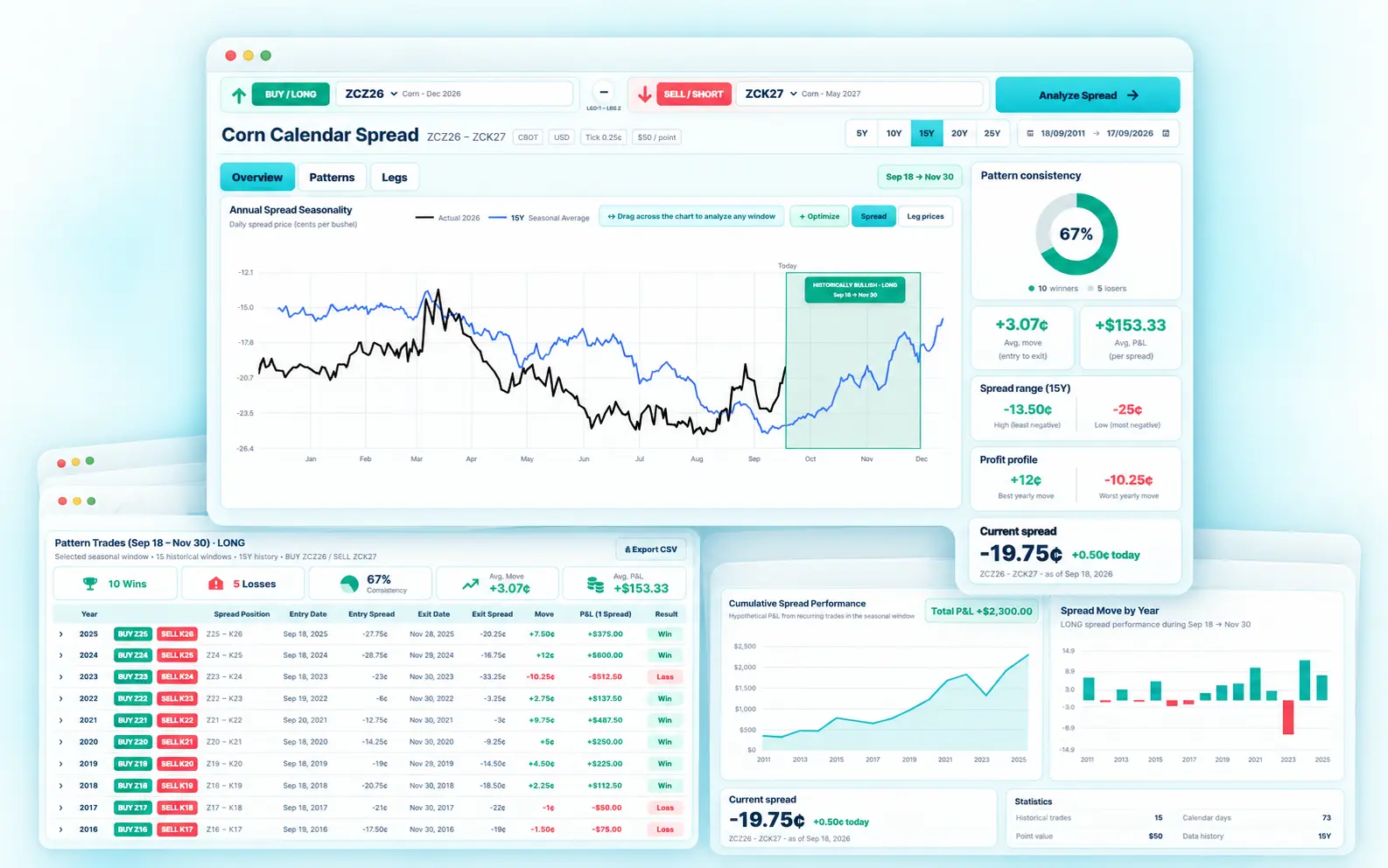
Check the spread across history
Once the formula is fixed, compare the same relationship across historical years and measure both direction and magnitude.
Analyze a Calendar SpreadRelated futures spread guides
Frequently asked questions
What is the formula for a futures calendar spread?
Define an order and subtract one contract price from the other, such as December minus May. Keep that order consistent across the study.
Can a negative spread be profitable?
Yes. Profit depends on the change in the spread relative to the position direction, not on whether the spread level is above or below zero.
How do I convert a spread move to dollars?
Use the market's current contract specification, including its quote convention, contract size and tick value.
Why does reversing the legs change the chart?
Because A minus B is the negative of B minus A. Reversing the legs flips the sign and direction of the series.
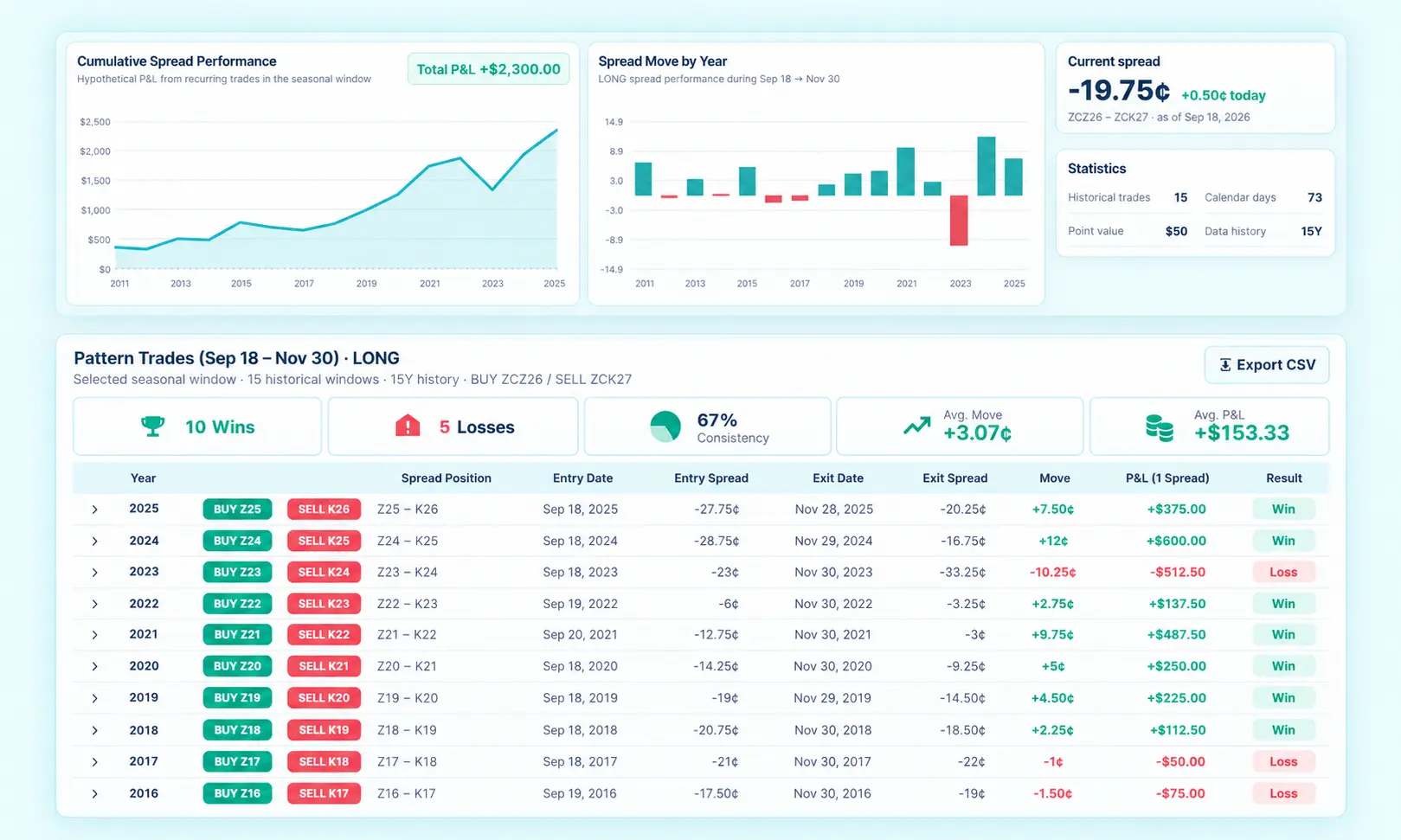
Research the relationship with historical data
Use exact delivery months, multiple lookbacks and current forward-curve context instead of relying on a generic chart.
Open Futures Spread AnalyzerFutures trading involves substantial risk. Historical patterns do not guarantee future results. This material is for education and research only and is not investment advice.