A futures market is made up of individual contracts with specific expiration months. A continuous futures series joins several of those contracts into one long chart. That can make outright price history easier to view, but it can also hide the contract identity that a calendar spread depends on.
What is a dated futures contract?
A dated contract represents one specific delivery month and year. For example, a corn contract for December 2026 is a different instrument from corn for May 2027. Each contract can have its own price, liquidity and response to current supply-and-demand conditions.
What is a continuous futures series?
A continuous series is a constructed history that rolls from one expiring contract into another. Data vendors may join the contracts using different roll dates and may adjust historical prices to reduce visible gaps. The resulting chart is useful for studying the broad market, but it is not itself one tradeable expiration.
| Question | Continuous series | Dated contract |
|---|---|---|
| Represents one expiration? | No | Yes |
| Requires a roll rule? | Yes | No |
| Useful for long outright history? | Often | Limited to contract life |
| Best foundation for a calendar spread? | No | Yes |
Why continuous data can distort a spread study
A calendar spread measures the relationship between two specific delivery months. If either leg is replaced by a continuous series, the underlying contract can change during the test. That means the calculation may stop representing the same economic relationship from one year to the next.
A December–May corn spread should compare December corn with May corn for the corresponding crop cycle. A generic front-month corn series may roll through March, May, July and other expirations, so it is not a substitute for either leg.
Back-adjusted data adds another complication
Some continuous series modify older prices when the roll occurs. That can produce a visually smooth outright chart, but calendar-spread P&L is based on the actual prices of the two contracts. An adjusted historical level may therefore be unsuitable for reconstructing the spread directly.
When continuous futures are still useful
Continuous data can be valuable for studying long-term outright trends, volatility regimes and broad market context. The key is to match the data construction to the research question. If the question is about one market through time, a continuous series can help. If the question is about a relationship between expirations, use the expirations themselves.
How Futures Spread handles the problem
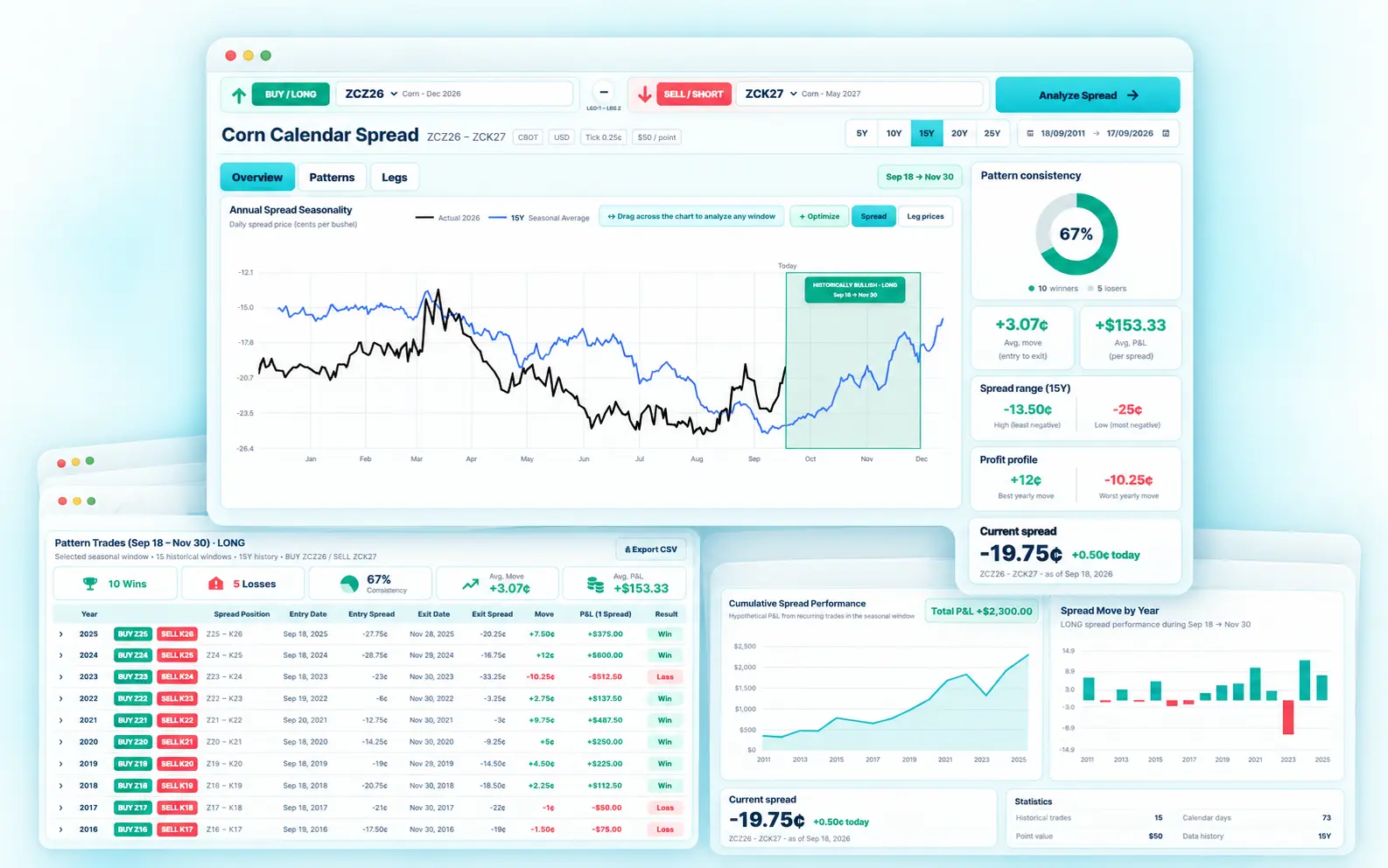
The analyzer works with dated futures contracts so that the two legs remain explicit. Historical seasonal comparisons can then map equivalent delivery-month relationships across prior years instead of blending unrelated expirations.
What to verify in any data source
- Which exact contract does each symbol represent?
- Is the history raw, back-adjusted or ratio-adjusted?
- What roll rule is used for continuous data?
- Are settlement, last trade or another price field being compared consistently?
- Are both legs aligned to the same trading dates?
Compare exact expirations
Select the delivery months directly and inspect their historical relationship without replacing either leg with a generic continuous contract.
Open Futures Spread AnalyzerRelated futures spread guides
Frequently asked questions
Is a continuous futures contract tradeable?
Usually no. It is a constructed data series made from multiple dated contracts. The individual listed expirations are the tradeable instruments.
Why do data vendors use continuous futures?
They make it easier to display long histories after individual contracts expire. Vendors can use different roll and adjustment methods.
Can I backtest a calendar spread with two continuous contracts?
For a precise calendar-spread study, exact dated contracts are generally more appropriate because the delivery-month relationship is part of the strategy definition.
Are continuous series useless?
No. They are useful for many outright-market questions. The issue is using them for a task where exact expirations matter.
Research the relationship with historical data
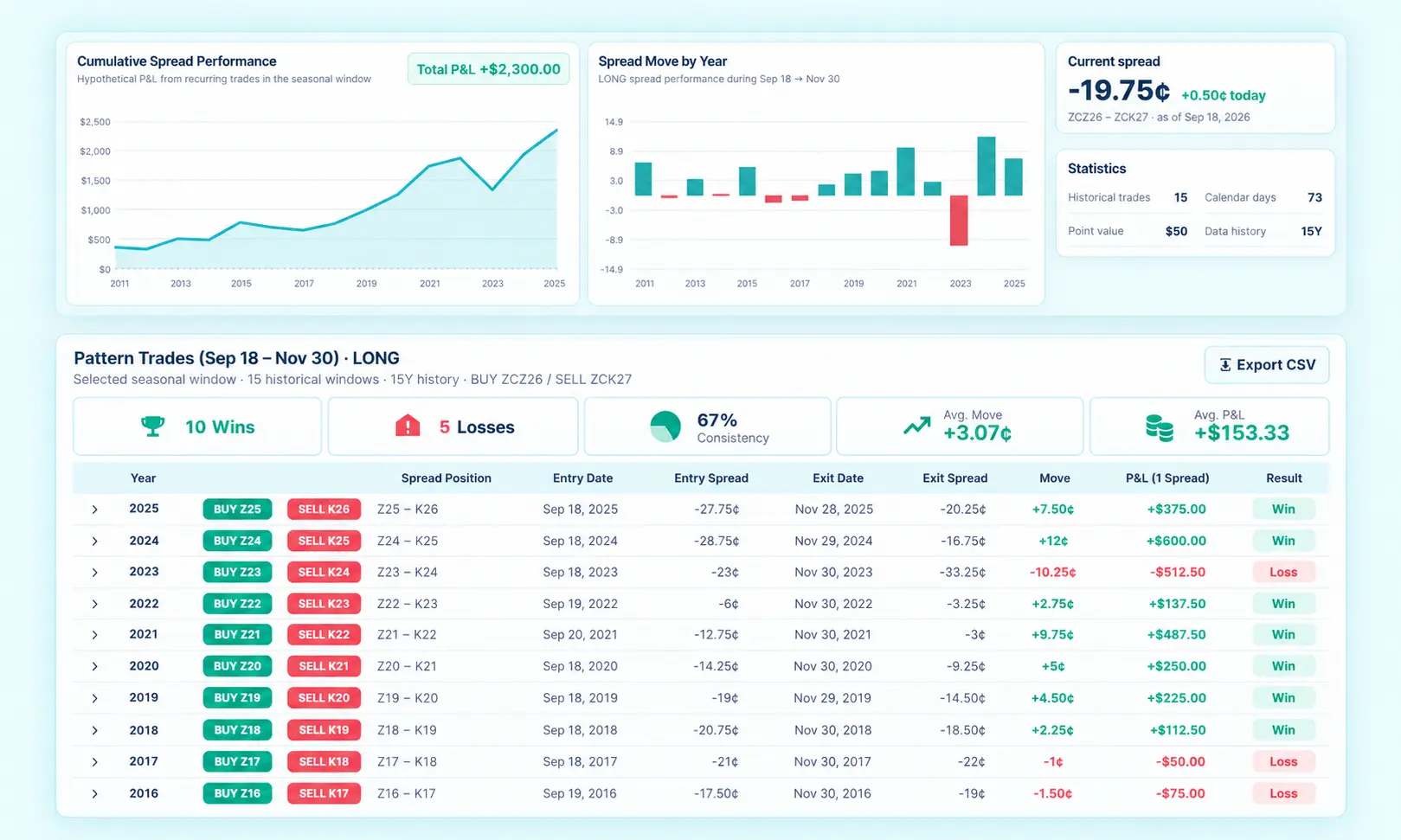
Use exact delivery months, multiple lookbacks and current forward-curve context instead of relying on a generic chart.
Open Futures Spread AnalyzerFutures trading involves substantial risk. Historical patterns do not guarantee future results. This material is for education and research only and is not investment advice.