Minneapolis Spring Wheat Futures: Contract, Venue and Research Basics
A practical introduction to the Minneapolis hard red spring wheat contract and the details a spread study must preserve.
Read the guide →Build a dependable foundation for MGE calendars, butterflies and wheat-class relationships. Start with the exact dated contract; finish with year-by-year evidence and the risks the average line hides.
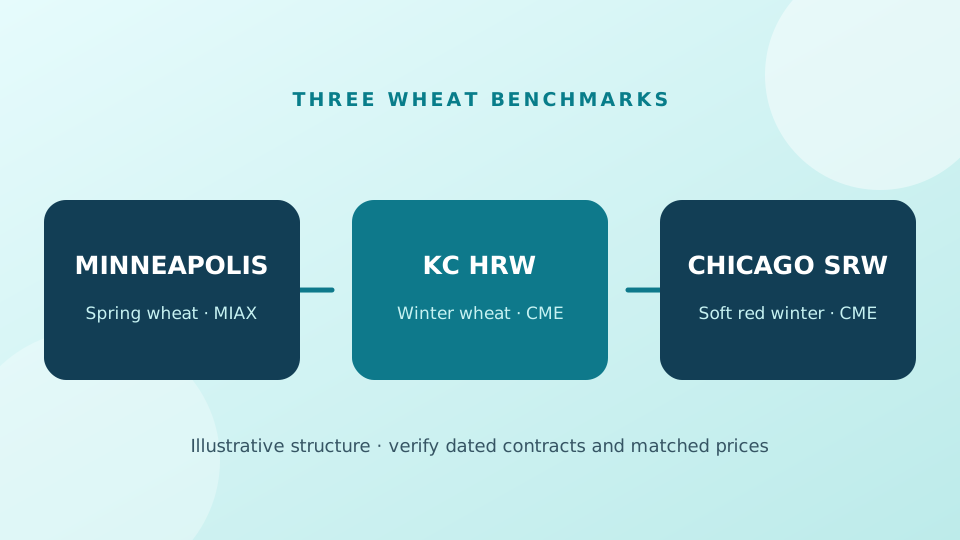
A wheat spread is only as trustworthy as its dated legs. This series shows how to quote Minneapolis spring wheat relationships, match prices across contracts, examine the crop-year context and keep an archive separate from a live market.
MIAX Futures operates the Minneapolis hard red spring wheat contract on Onyx, while CME lists a separate CBOT HRS future. CME ended routing and market data for MGEX products on Globex in June 2025. MIAX’s vendor list identifies MWE for Bloomberg after the migration; CME’s vendor table identifies KFP for its HRS product. These details matter when a ticker produces a blank chart or when two spring-wheat prices appear to refer to the same market.
Our imported Minneapolis historical observations stop on 24 October 2025. They can support historical year comparisons but cannot create a current 2026 spread or trade signal. The research interface makes that distinction visible.
Select a calendar, 1:−2:1 butterfly or same-month wheat pair; inspect raw yearly lines and date-window outcomes. Current MGE metrics are intentionally unavailable.
Open MGE Historical Research →A practical introduction to the Minneapolis hard red spring wheat contract and the details a spread study must preserve.
Read the guide →Two hard red spring wheat contracts can have similar names while belonging to different venues and data histories.
Read the guide →Map delivery codes to actual contract months before calculating a calendar or butterfly spread.
Read the guide →A vendor root, month code and year must resolve to the intended exchange-listed contract before any price import.
Read the guide →A blank chart is a data-quality problem to diagnose, not permission to fill the hole with another wheat market.
Read the guide →Calculate one Minneapolis delivery month against another without losing the contract-year mapping or units.
Read the guide →A precise way to study the Minneapolis U–Z relationship around the new-crop period.
Read the guide →Keep the year offset intact when December is paired with the following March.
Read the guide →A three-month structure measures curve shape rather than simply comparing two delivery months.
Read the guide →Use the N–U–Z example to see how a butterfly isolates the shape around the new-crop hinge.
Read the guide →Compare two hard wheat markets with separate crop calendars, venues and delivery economics.
Read the guide →A clear framework for comparing Minneapolis hard red spring wheat with Chicago soft red winter wheat.
Read the guide →Market identity, grain class and delivery economics are part of the formula.
Read the guide →Treat a seasonal curve as a testable historical summary, not a prediction.
Read the guide →Connect a September delivery month to observed crop progress without assuming the same harvest date every year.
Read the guide →Storage economics can help explain a deferred premium, but do not set a guaranteed spread target.
Read the guide →A repeatable backtest needs dated contracts, matched observations, explicit missing-data rules and an honest sample.
Read the guide →A relative-value position can still lose substantially and encounter operational risk.
Read the guide →Exchange minima and broker requirements can differ, especially across venues and three-leg structures.
Read the guide →Twenty checks are not needed if the first few essentials are missing: identity, date, price field and reconciliation.
Read the guide →No. They are separately listed exchange products. Keep their vendor identifiers, specifications and histories separate.
Not from the imported dataset, whose latest MGE observation is 24 October 2025. The website currently shows historical MGE research only.
For a 5,000-bushel one-to-one calendar or the defined 1:−2:1 weighted butterfly, one cent per bushel equals $50 before transaction costs.
Exchange and USDA sources establish product definitions and context. Recheck the current rules and dates before using a contract.
Futures trading involves substantial risk. The educational examples and historical outcomes on this page are not live prices or investment advice.