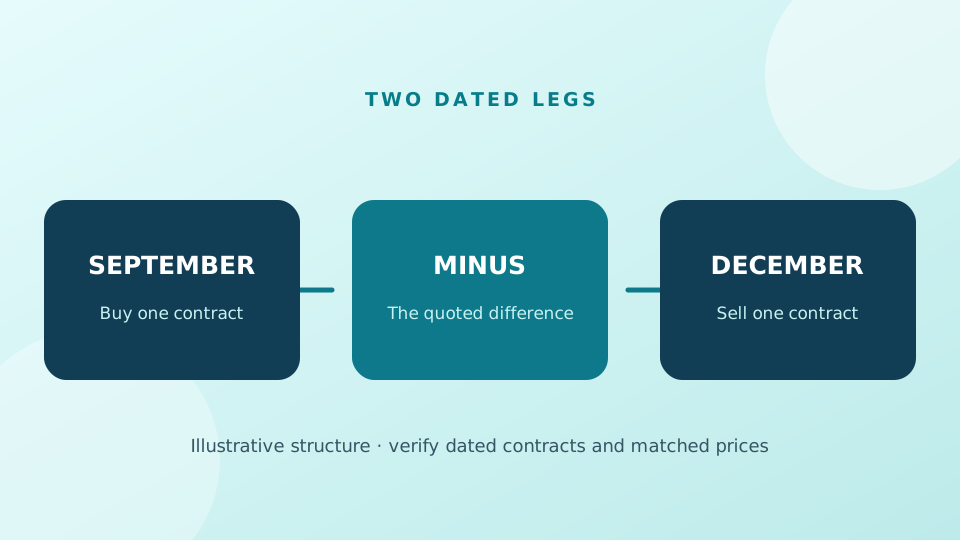
A precise way to study the Minneapolis U–Z relationship around the new-crop period. This guide keeps the exchange, dated legs and historical-data boundary visible so the quoted relationship can be checked.
What U–Z compares
September and December are two Minneapolis delivery months in the same contract cycle. MIAX designates September as a new-crop month. The U–Z quote is September minus December, using a one-to-one pair and same-day observations. That convention must be stated before comparing any entry or exit result.
The historical sample for 2025 includes a same-date observation on 30 June: September at 620.75 cents and December at 639.00 cents, giving U–Z = −18.25 cents. The sign describes relative price at that moment; it does not establish a profitable direction or a current 2026 quote.
Harvest is context, not a signal
Spring wheat progress and harvest conditions can make the U–Z relationship interesting near the crop-year transition. USDA’s Crop Progress reports can help place a historical window next to planting, condition and harvest information. Weather, quality, inventories and commercial movement also matter, and the same calendar dates can correspond to different crop stages in different years.
Treat an observed seasonal tendency as a hypothesis. Set the window before looking at the result, count valid years, review losing seasons and avoid choosing entry and exit dates solely because they would have maximized the past average.
What to inspect on the chart
Plot the raw U–Z spread for individual years and a normalized pattern separately. The raw line gives the cents per bushel needed for P&L. A normalized line is useful for comparing shape but should never be read as an executable price level. Watch for fewer matched trading days near the nearby leg’s notice and expiry.
For the 2026 setup, historical Minneapolis data remain available but a current U26 and Z26 paired quote has not been verified in the imported series. The website therefore labels the study historical only; it should not show a current opportunity card from that archive.
See the dated contracts behind the formula
Explore matched historical Minneapolis prices, individual years and the selected date window. The dataset has no verified current MGE spread.
Open MGE Historical Research →Primary sources
Exchange and USDA sources establish product definitions and context. Recheck the current rules and dates before using a contract.
Continue this series
Educational historical research, not investment advice. Futures and multi-leg spreads involve substantial loss, execution and delivery risk. Historical results do not guarantee future outcomes. Imported Minneapolis prices stop on 24 October 2025; current quotes and margin must be verified independently.