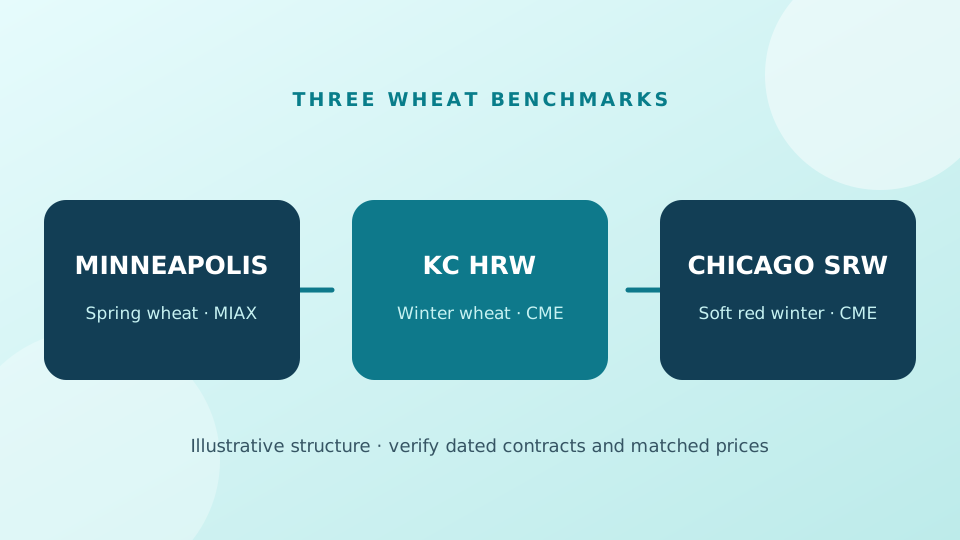
A practical introduction to the Minneapolis hard red spring wheat contract and the details a spread study must preserve. This guide keeps the exchange, dated legs and historical-data boundary visible so the quoted relationship can be checked.
Which wheat does this contract represent?
Minneapolis hard red spring wheat is a distinct wheat market, with its own delivery rules and regional cash economics. MIAX describes it as high-protein wheat used in bread and other food products. That identity matters: a Minneapolis price should not be silently substituted for a Chicago soft red winter or Kansas City hard red winter price. A cross-wheat spread is a comparison between two different benchmarks, not a single continuous wheat price.
The 2026 MIAX contract specification lists a 5,000-bushel contract, March, May, July, September and December delivery months, a quarter-cent minimum price movement and physical delivery by shipping certificate. At 5,000 bushels, a one-cent move is $50 and a quarter-cent tick is $12.50 per contract. Verify the current specification before entering a position because delivery terms and exchange rules can change.
Contract identity before any chart
Write down exchange, product, delivery month and year, price field and timestamp. “Spring wheat” is not enough to identify the tradable security. MIAX lists its Minneapolis contract under the Onyx code MWE; CME separately lists a CBOT hard red spring wheat contract under HRS. The two may be economically related, but they have different venue identities and must retain separate histories.
A dated contract such as the December 2025 Minneapolis contract is a different instrument from December 2026. A generic continuous chart may splice prices at a roll and hide the contract months that define a spread. For seasonal work, retain the original dated legs and compare the same month relationship from year to year.
A disciplined first analysis
Begin with one question: how did a particular pair of delivery months behave over comparable historical seasons? Join both legs on the same trading dates, calculate the quoted difference, inspect each season and record the dates of the actual observations. Then review the exchange calendar and physical market context before interpreting a recurring pattern.
FuturesSpread currently exposes the imported Minneapolis history for educational research. The latest imported MGE observation is dated 24 October 2025; that historical dataset cannot provide a September 2026 current spread or current trading signal. This limitation belongs next to every result, not hidden below a chart.
See the dated contracts behind the formula
Explore matched historical Minneapolis prices, individual years and the selected date window. The dataset has no verified current MGE spread.
Open MGE Historical Research →Primary sources
Exchange and USDA sources establish product definitions and context. Recheck the current rules and dates before using a contract.
Continue this series
Educational historical research, not investment advice. Futures and multi-leg spreads involve substantial loss, execution and delivery risk. Historical results do not guarantee future outcomes. Imported Minneapolis prices stop on 24 October 2025; current quotes and margin must be verified independently.