Map delivery codes to actual contract months before calculating a calendar or butterfly spread. This guide keeps the exchange, dated legs and historical-data boundary visible so the quoted relationship can be checked.
Five delivery months
The MIAX Minneapolis specification names March, May, July, September and December. Standard futures month letters for these are H, K, N, U and Z. The month letter is only one part of a dated contract: the year is equally important. September 2025 and September 2026 are different legs with different available trading histories and delivery deadlines.
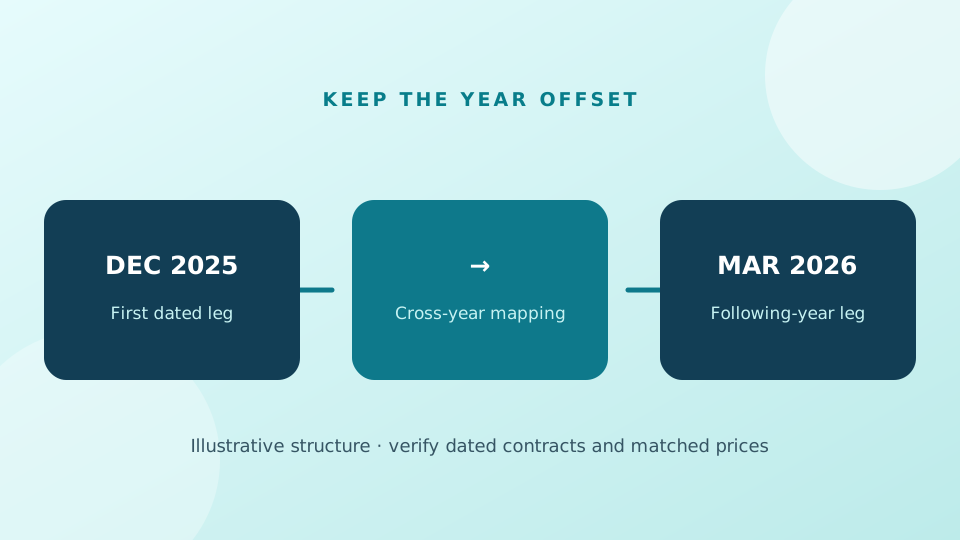
A calendar pair may be contained within one contract year, such as September minus December, or cross into the next one, such as December 2025 minus March 2026. When replaying a cross-year pair in 2018, preserve the same offset: December 2018 minus March 2019, rather than forcing both legs into 2018.
The crop-year hinge
September is designated the new-crop month in the MIAX specification. This is a useful organizing label, not a guarantee that a September–December spread moves in one direction every year. Weather, quality, stocks and delivery conditions can alter the curve. A study that crosses from old to new crop should explain which side of the harvest each leg represents.
Near a delivery month, the nearby contract can react to notice, delivery and liquidity in ways a deferred contract does not. Check the first notice date, last trade date and the broker’s handling of physical delivery before treating the spread as a simple seasonal bet.
Build a reliable month selector
A good research interface shows the month and year of each leg, its exchange and whether the contract has prices on the dates being analyzed. It should reject a request whose historical counterpart lacks an actual observation. It should not silently pair Friday’s nearby price with Monday’s deferred price.
For a butterfly, all three month codes and years need to be explicit. July–September–December uses the formula July minus two September plus December. The middle contract is a two-lot leg, but the quoted value already incorporates that weight; multiplying the result by three or four again would inflate P&L.
See the dated contracts behind the formula
Explore matched historical Minneapolis prices, individual years and the selected date window. The dataset has no verified current MGE spread.
Open MGE Historical Research →Primary sources
Exchange and USDA sources establish product definitions and context. Recheck the current rules and dates before using a contract.
Continue this series
Educational historical research, not investment advice. Futures and multi-leg spreads involve substantial loss, execution and delivery risk. Historical results do not guarantee future outcomes. Imported Minneapolis prices stop on 24 October 2025; current quotes and margin must be verified independently.