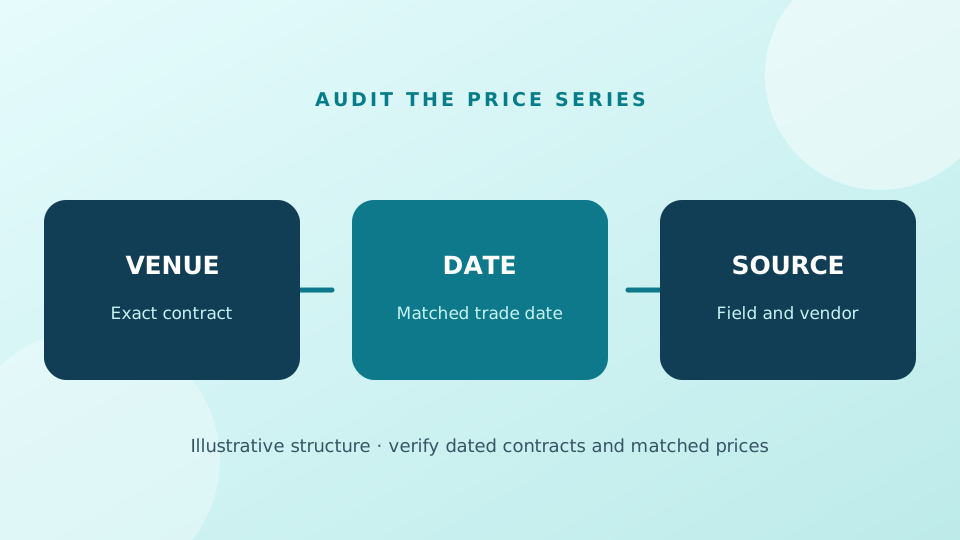
A vendor root, month code and year must resolve to the intended exchange-listed contract before any price import. This guide keeps the exchange, dated legs and historical-data boundary visible so the quoted relationship can be checked.
What the historical files contain
The imported Minneapolis spreadsheets use dated column headers such as MWZ25 Comdty. They record a Bloomberg Last value for a particular trading date. The import keeps that value as Last, rather than presenting it as an official exchange settlement. Even if two fields are often close, their definitions and update times are not interchangeable.
Our historical database uses MW as an internal instrument symbol. That internal label is not a promise that a vendor accepts the same string as its current security identifier. The MIAX vendor list published after the Onyx migration specifically records BBG MWE. Confirm the actual security’s exchange, long name, month and year inside the terminal before downloading.
Do not infer a ticker from a pattern
Bloomberg search results can resolve aliases or shorthand to securities with similar names. A displayed title such as “MGE Dec26” helps identify intent, but a blank chart under the chosen field and date range is still a blank chart. Test a single dated contract with another field and inspect the vendor mapping and exchange data coverage. Do not type a guessed suffix into a daily pipeline and treat its output as the Minneapolis close.
The separate CME hard red spring wheat contract is HRS on Globex and KFP Comdty in CME’s vendor-code table. Copying its prices into MW would conceal a venue change. If both contracts have prices, keep two instrument IDs and compare them explicitly.
Import checks
For each downloaded column, verify the ticker, month and year, the range of actual observations, positive quarter-cent prices, trading dates and duplicate rows. Fractional Bloomberg glyphs such as one-quarter, one-half and three-quarters of a cent require numeric conversion before any arithmetic. A correction tab can amend a mislabeled column without overwriting verified observations from unrelated contracts.
The minimum deliverable is a source-to-database reconciliation for each dated contract: count, first and last date, and date-price differences. Only after that check should a calendar, butterfly or intermarket calculation use the series.
See the dated contracts behind the formula
Explore matched historical Minneapolis prices, individual years and the selected date window. The dataset has no verified current MGE spread.
Open MGE Historical Research →Primary sources
Exchange and USDA sources establish product definitions and context. Recheck the current rules and dates before using a contract.
Continue this series
Educational historical research, not investment advice. Futures and multi-leg spreads involve substantial loss, execution and delivery risk. Historical results do not guarantee future outcomes. Imported Minneapolis prices stop on 24 October 2025; current quotes and margin must be verified independently.