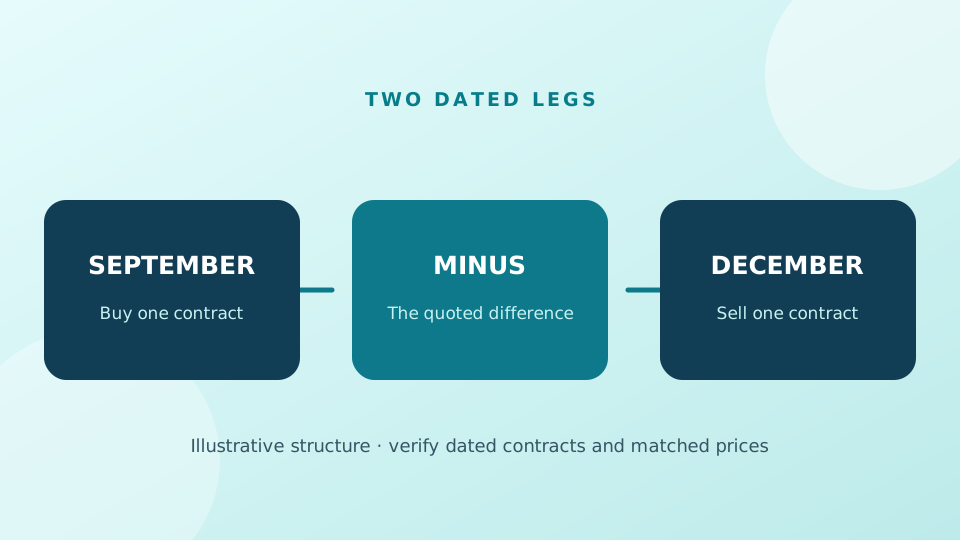
Storage economics can help explain a deferred premium, but do not set a guaranteed spread target. This guide keeps the exchange, dated legs and historical-data boundary visible so the quoted relationship can be checked.
Why a deferred month can cost more
Physical grain can be held for later sale, but storing it consumes space and ties up capital. Insurance, handling and financing contribute to the economics often described as carry. When supplies are ample, deferred delivery prices may exceed nearby prices enough to encourage storage; when nearby grain is urgently needed, that relationship may compress or invert.
A nearby-minus-deferred chart becomes more negative as the deferred premium widens. This is just a sign convention. Reversing the formula turns the same economic state into a positive chart. Always state which month is bought and which is sold.
Exchange rules matter
The physical-delivery mechanism can affect basis and convergence. MIAX updated Minneapolis delivery terms for the September 2026 period, including shipping certificates; CME’s separate CBOT HRS contract has its own rules. A storage discussion must name the venue and vintage of the contract rather than transfer a rule from one wheat market to another.
CME’s variable-storage material explains how nearby spreads can be evaluated against financial full carry for its products. That framework is informative, but do not copy a CME rule or numeric parameter into an MIAX Minneapolis backtest without checking the MIAX rulebook.
How to use carry in research
Compare a quoted calendar spread with an independently documented cost-of-carry estimate for the same period and delivery terms. Keep the estimate separate from actual observed spread prices and record any rule changes. The price can move for many reasons besides storage: crop quality, transportation, cash demand and liquidity are examples.
A historical curve illustrates what happened. It cannot supply current financing costs, a current exchange spread price or a present-day margin requirement by itself. Verify those independently for the exact legs and account.
See the dated contracts behind the formula
Explore matched historical Minneapolis prices, individual years and the selected date window. The dataset has no verified current MGE spread.
Open MGE Historical Research →Primary sources
Exchange and USDA sources establish product definitions and context. Recheck the current rules and dates before using a contract.
Continue this series
Educational historical research, not investment advice. Futures and multi-leg spreads involve substantial loss, execution and delivery risk. Historical results do not guarantee future outcomes. Imported Minneapolis prices stop on 24 October 2025; current quotes and margin must be verified independently.